Best Fabric for Summer Abayas in Pakistan
Discover the most breathable and comfortable fabrics for summer abayas in Pakistan, helping you stay cool, elegant, and modest during hot months.
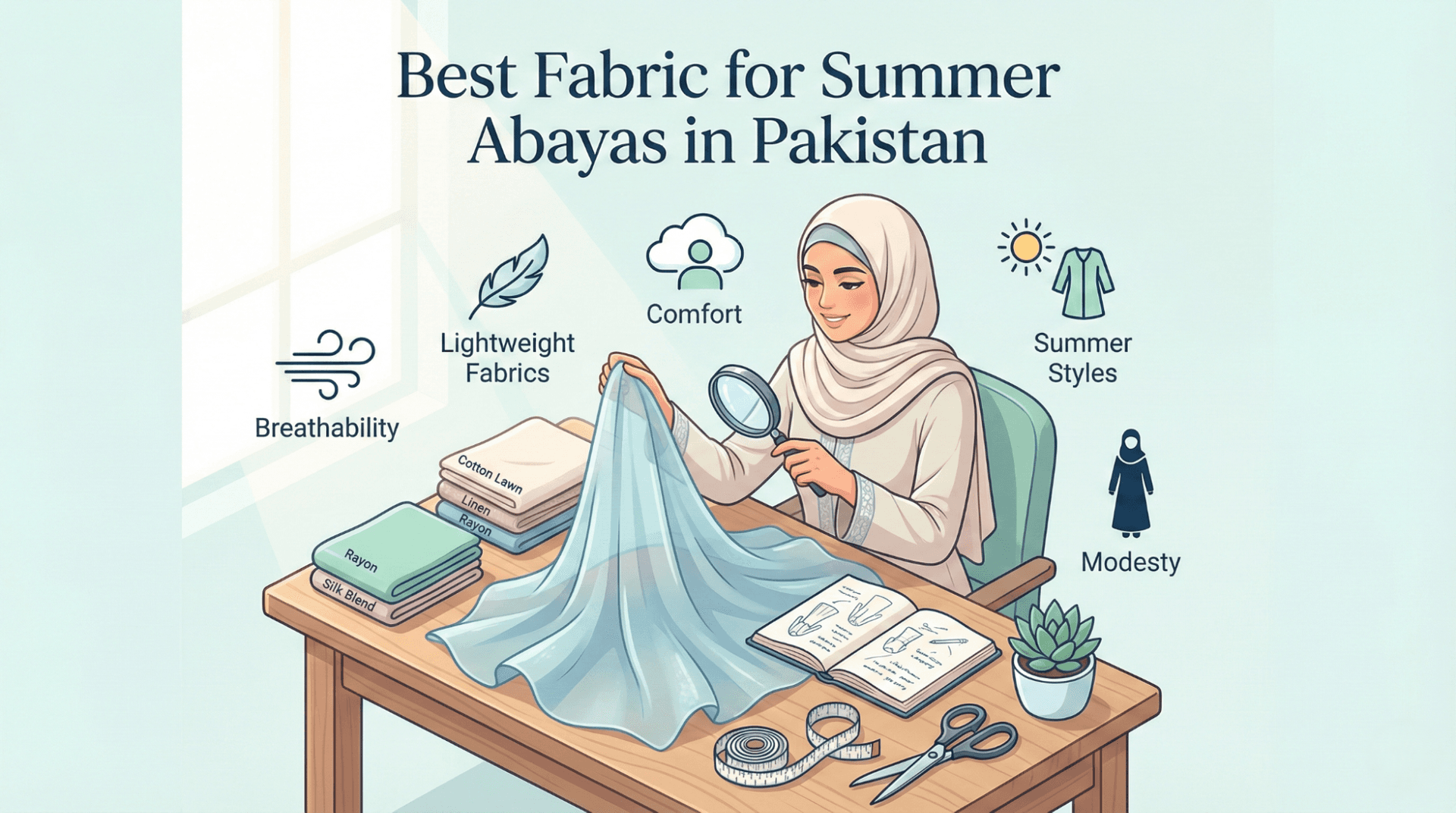
Summer in Pakistan is not just a season; it is a test of endurance. From the scorching dry heat of Lahore and Multan to the suffocating humidity of Karachi, staying covered while staying cool is a genuine challenge for women.
For those of us who wear the abaya daily—whether to university, the office, or just running errands—the wrong fabric can turn a simple commute into a nightmare. Many women focus entirely on the design or embroidery of an abaya, only to realize later that the material traps heat and sticks to the skin.
If you are building your summer wardrobe, the fabric choice matters far more than the cut. This guide will walk you through the best fabrics for summer abayas in Pakistan, helping you choose materials that offer breathability, elegance, and modesty without the heatstroke.
Why Fabric Matters More Than Style in Summer
In cooler months, you can prioritize velvet finishes or heavy layers. However, from April to October in Pakistan, your top priority must be thermoregulation.
A "summer-friendly" fabric needs to perform three key jobs:
- Breathability: It must allow air to pass through to your skin.
- Moisture Wicking: It should absorb sweat or allow it to evaporate quickly, rather than trapping it.
- Weight & Drape: It should be lightweight enough not to burden your shoulders but have enough weight to fall elegantly without clinging to the body.
If an abaya is made of cheap, synthetic polyester, it creates a "greenhouse effect" against your skin, raising your body temperature and causing discomfort during long days.
Best Fabric for Summer Abayas in Pakistan (Detailed Comparison)
Here is a breakdown of the most popular fabrics available in Pakistani markets and online stores, rated for our local summer.
✔ Korean Nida (The Gold Standard)
Korean Nida is widely considered the premium choice for abayas in Pakistan. Unlike cheaper alternatives, authentic Korean Nida is lightweight, silky, and has a cooling effect on the skin.
- Pros: Extremely soft, minimal wrinkling, and excellent opaque coverage without being thick.
- Cons: Higher price point than standard fabrics.
- Verdict: Perfect for daily wear and formal events. Look for "Matte Korean Nida" for the best summer experience.
✔ Nidha (classNameic / Saudi)
You will often see just "Nida" listed on product descriptions. This is usually slightly thicker than its Korean counterpart. It has a beautiful sheen and looks expensive.
- Pros: Durable and has a very elegant, structured fall.
- Cons: Can be slightly warm for outdoor pedestrian travel in June/July.
- Verdict: Great for air-conditioned offices or evening wear, but proceed with caution for outdoor mid-day wear.
✔ Chiffon
Chiffon is the go-to for formal summer abayas. It is incredibly airy and sheer.
- Pros: Maximum breathability and flows beautifully in the breeze.
- Cons: It is see-through, so italways requires a lining or a full inner dress, which can add a layer of warmth.
- Verdict: Best for weddings, Eid, and occasions where elegance is key.
✔ Georgette
Georgette has a grainy texture compared to the smoothness of Chiffon or Nida. It is durable and holds its shape well.
- Pros: Does not wrinkle easily and drapes elegantly.
- Cons: Synthetic georgette can be heat-trapping. You must ensure it is a high-quality, breathable weave.
- Verdict: Good for occasional wear, but maybe not for an 8-hour shift in a non-AC environment.
✔ Cotton Blend (Lawn/Jersey)
In Pakistan, we live in Lawn during the summer. Cotton abayas utilize this natural fiber to provide maximum cooling.
- Pros: Highly breathable, absorbs sweat, and feels natural against sensitive skin.
- Cons: Wrinkles very easily. Pure cotton can sometimes stick to leggings or pants if not lined.
- Verdict: The absolute winner forcomfort. Best for university students and daily housework.
✔ Linen Blend
Linen is made from the flax plant and is structurally designed to keep you cool.
- Pros: Very strong fabric that actually gets softer with each wash. It allows heat to escape rapidly.
- Cons: prone to creasing and has a more casual, textured look that isn't suitable for formal events.
- Verdict: Excellent for extreme heat, especially in dry climates like Multan or Sahiwal.
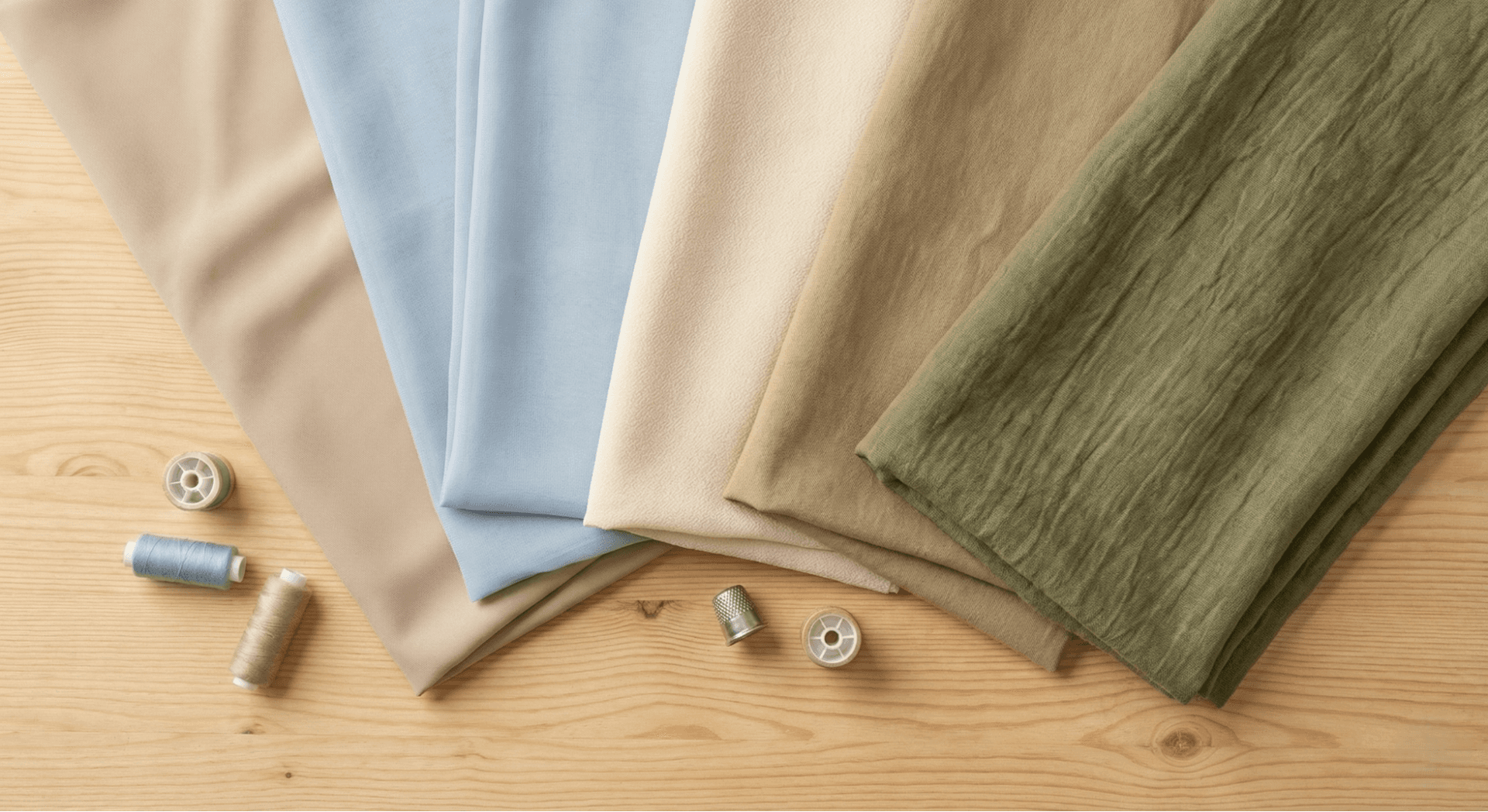
Which Fabric Is Best for Karachi vs. Lahore?
Pakistan’s weather isn't the same everywhere, and your abaya choice should reflect your city's specific climate.
- For Karachi (High Humidity)Humidity prevents sweat from evaporating. You need fabrics that breathe aggressively. Linen blends and Cotton are your best friends here. Avoid heavy Nida or anything with a tight synthetic weave, as it will feel wet and sticky instantly.
- For Lahore, Islamabad & Multan (Dry Heat)The heat is intense but dry. You have slightly more freedom here. Korean Nida works beautifully because it protects your skin from the scorching sun while staying cool. Loose-fitting Georgette is also manageable here if you stay out of direct sunlight.
How to Identify Good Quality Summer Fabric Online
Buying abayas online in Pakistan can be tricky since you cannot touch the material. Here is how to spot the right one:
- Read the Composition: Look for keywords like "Summer Friendly," "Lightweight," or "Soft Crepe." Avoid items that just say "Polyester" without further qualification.
- Check the Opacity: Summer fabrics are thin. Does the seller mention that it’s "Opaque" or "Non-See-Through"? If not, you might end up needing heavy layers underneath, defeating the purpose.
- Zoom in on Drape: Look at how the fabric falls on the model. Does it look stiff? Stiff fabrics usually trap air. You want fabric that ripples and flows—this indicates softness and breathability.
- Customer Reviews: Search for reviews specifically mentioning "summer" or "garmi." Pakistani buyers are very honest about whether a fabric made them sweat!
Common Mistakes Women Make When Buying Summer Abayas
- Over-Embellishment: Heavy stone work, beads, or thick embroidery patches add weight and block airflow. For summer, choose printed abayas or minimal piping details instead.
- Ignoring the Lining: Buying a chiffon abaya is great, but if the attached lining is cheap polyester silk, you will still be hot. Ensure the inner lining is also breathable (like cotton or soft crepe).
- Wrong Colors: While black is classNameic, it absorbs heat. Consider deep greys, browns, or even lighter pastel tones for your day-wear abayas to reflect the sun.
- Tight Sleeves: Tight cuffs prevent air circulation up the arm. Opt for straight or bell sleeves to allow a breeze to pass through.
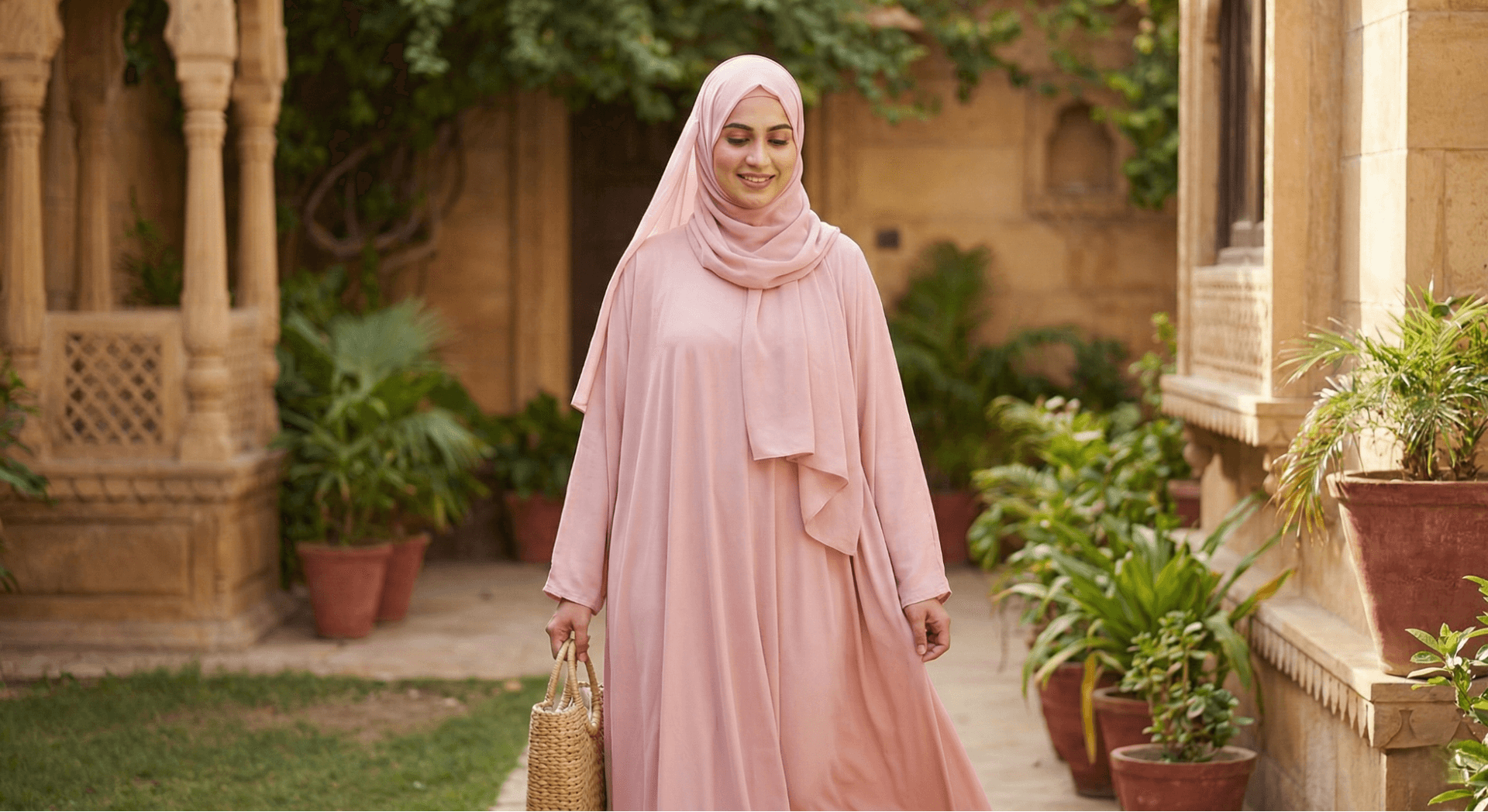
Where to Find Summer-Friendly Abayas in Pakistan
Fortunately, the Pakistani modest fashion market has evolved rapidly. Many local brands now curate collections specifically for our "long summer."
When browsing, look for stores that categorize their items by season or fabric. Reliable stores will always list the fabric type clearly (e.g., "Imported Korean Nida" vs just "Nida"). Some modest fashion stores like Haya Threads offer curated abaya collections with lightweight fabrics suitable for Pakistan’s summer climate.
Always check the return policy—good brands know that fit and feel are personal, especially with abayas.
Recommended Reads
- Best online stores to buy abayas with modern designs in Pakistan
- What is Hijab in Islam? Meaning, Types & Modern Styling Guide
Conclusion
Choosing the best fabric for summer abayas in Pakistan isn't just about looking good; it is about feeling confident and comfortable in your modesty. Whether you choose the luxurious feel of Korean Nida or the natural comfort of Cotton, prioritizing breathability will change your summer experience.
Invest in quality fabric that breathes, and you will find that you can brave the June heat with grace and ease.
Frequently Asked Questions (FAQs)
Q-1: What is the best fabric for summer abayas in Pakistan?
Korean Nida and Cotton blends are widely considered the best options. Korean Nida offers a formal, cooling feel with a beautiful drape, while Cotton is ideal for maximum breathability in casual, daily wear settings.
Q-2: Is Korean Nida good for summer?
Yes, high-quality Korean Nida is excellent for summer. It is lighter, softer, and more breathable than standard Nida or other synthetic fabrics, making it a top choice for hot weather in Pakistan.
Q-3: Which abaya fabric is most breathable?
Natural fibers like Cotton and Linen are the most breathable. However, for a balance of breathability and wrinkle-resistance, a high-quality lightweight Georgette or Korean Nida is often preferred for outdoor wear.
Q-4: Cotton vs. Nida: Which is better for summer?
It depends on the occasion. Cotton is cooler and absorbs sweat better, making it perfect for university or home. Nida is dressier, does not wrinkle, and flows better, making it superior for office wear or formal gatherings.
Q-5: What fabric is best for humid weather like Karachi?
In high humidity, you want fabrics that don't stick to the skin. Linen blends and loose-woven Cottons are best because they allow moisture to evaporate. Avoid heavy synthetics that trap humidity against the body.
Q-6: Are chiffon abayas suitable for daily wear?
Chiffon is very breathable but usually requires a lining or an inner dress because it is sheer. This double-layering can sometimes make it warmer than a single layer of opaque Nida or Cotton, so it is often better reserved for occasions.
@All images in this blog are sourced from Wallpezia